What changed, why it helps and what comes next. Simple updates from our work on growing tropical plants in challenging climates.
GeoCuna’s growing box is still a design, with building and real-world tests ahead. Updates marked retrospective look back at earlier work.
Update19–25 October 2026
Checking the box and getting the camera views right
We improved the tray design and used camera renders to plan the next learning step.
Written 24 October 2026 · Published 24 October 2026
This update covers work through 24 October 2026. Later work will be added in the next update.
What changed?
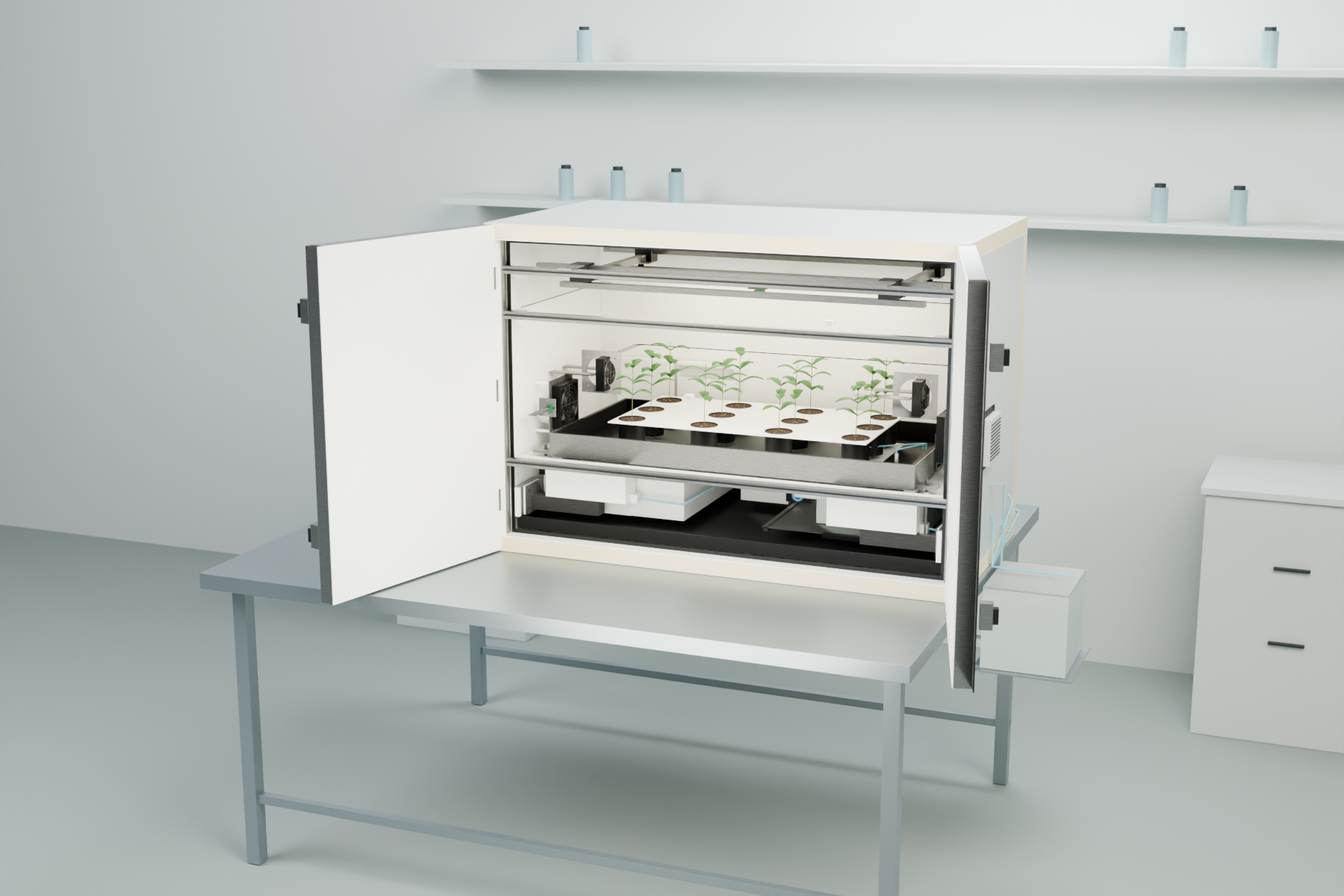
We checked how the box can be built and how its parts fit together. The design now includes four weighing sensors under the plant tray, with updated electronics, wiring and digital models.
What did we learn?
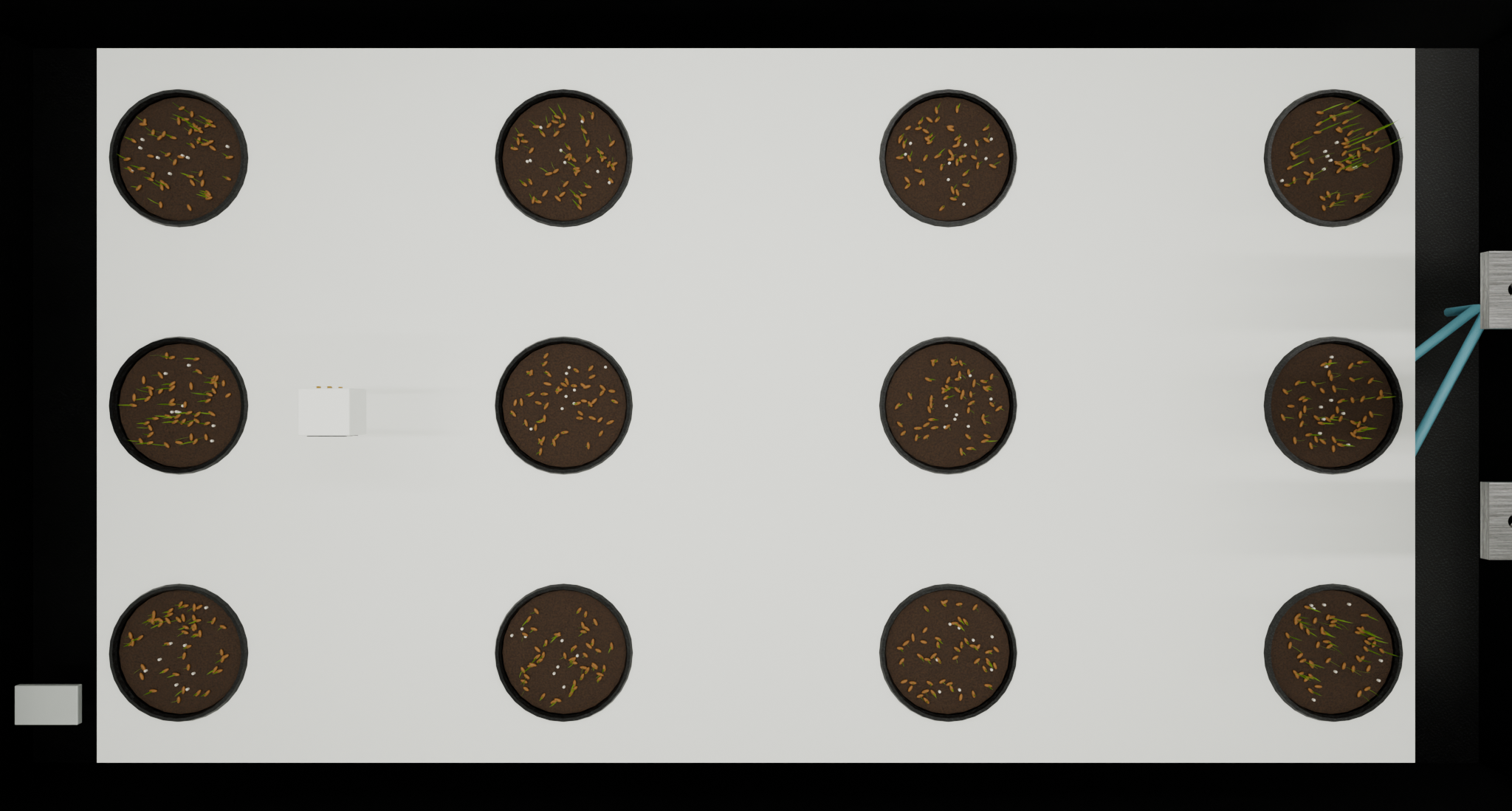
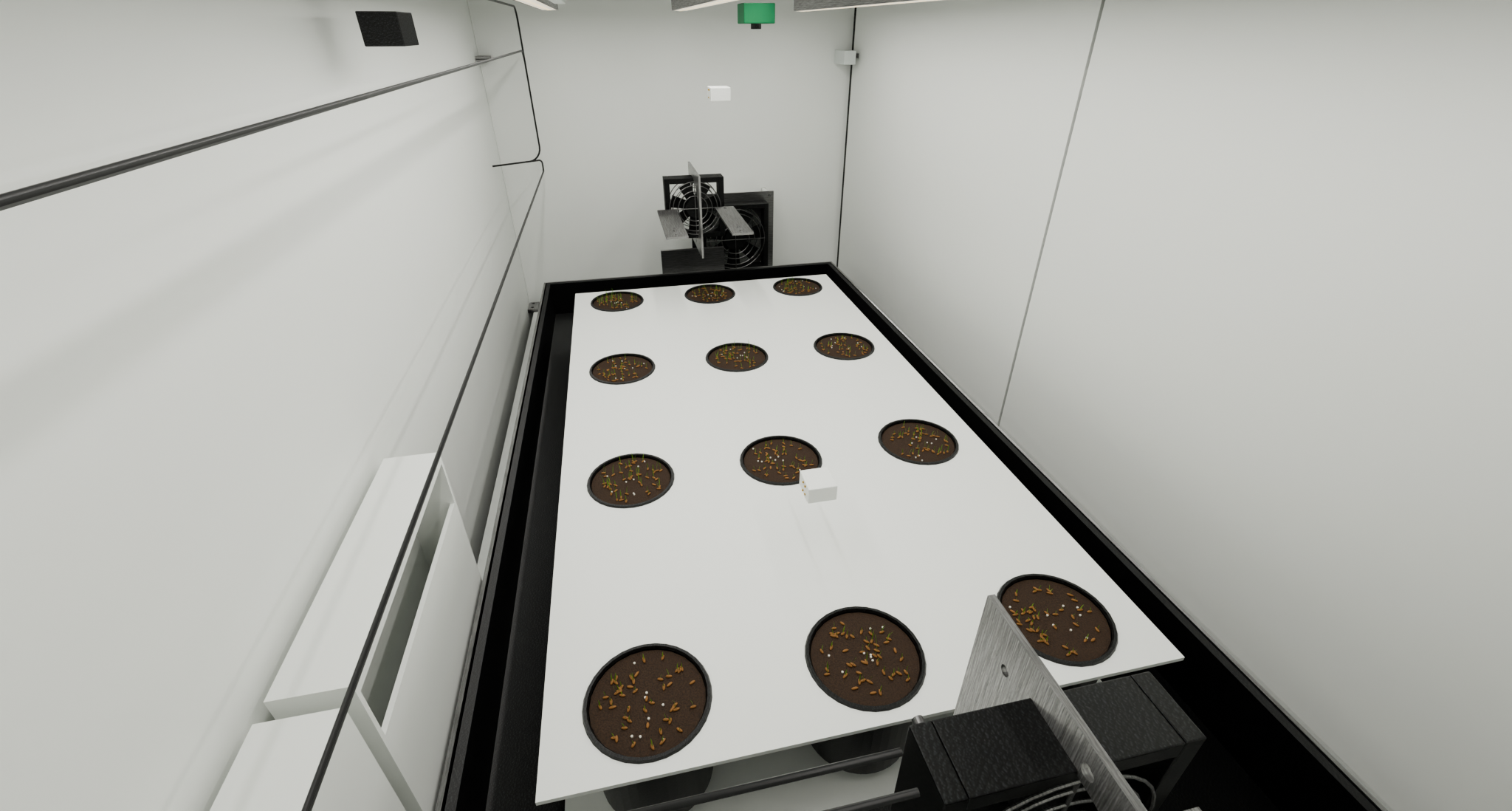
Some early practice images used the wrong pot shape. We stopped that work and corrected the references to match the round pods in the design. We then rendered top and side views to help check what the cameras could see.
What comes next?
We need to finish checking the camera views and labels, then collect real growing examples. The box is still a design. Computer checks and rendered plants do not prove a safe machine, a successful grow or an accurate AI model.
Founder notes for the week
Design and review
Across several AI-assisted sessions, we reviewed how the box fits together and whether the parts, wiring, airflow and tray supports make practical sense. The reviews helped us find details to improve before building.
Preparing to train
We are preparing the AI training work and refining the top and side camera views. The aim is to settle repeatable views and useful labels before starting training.
The next real-world step
Next, we plan to set up a real wheatgrass grow with cameras matching the intended views. That will give us real examples to compare with the renders and use in training.
Building toward the box
In parallel, we will keep improving the box design and look for component suppliers and fabrication partners who can help make its parts.
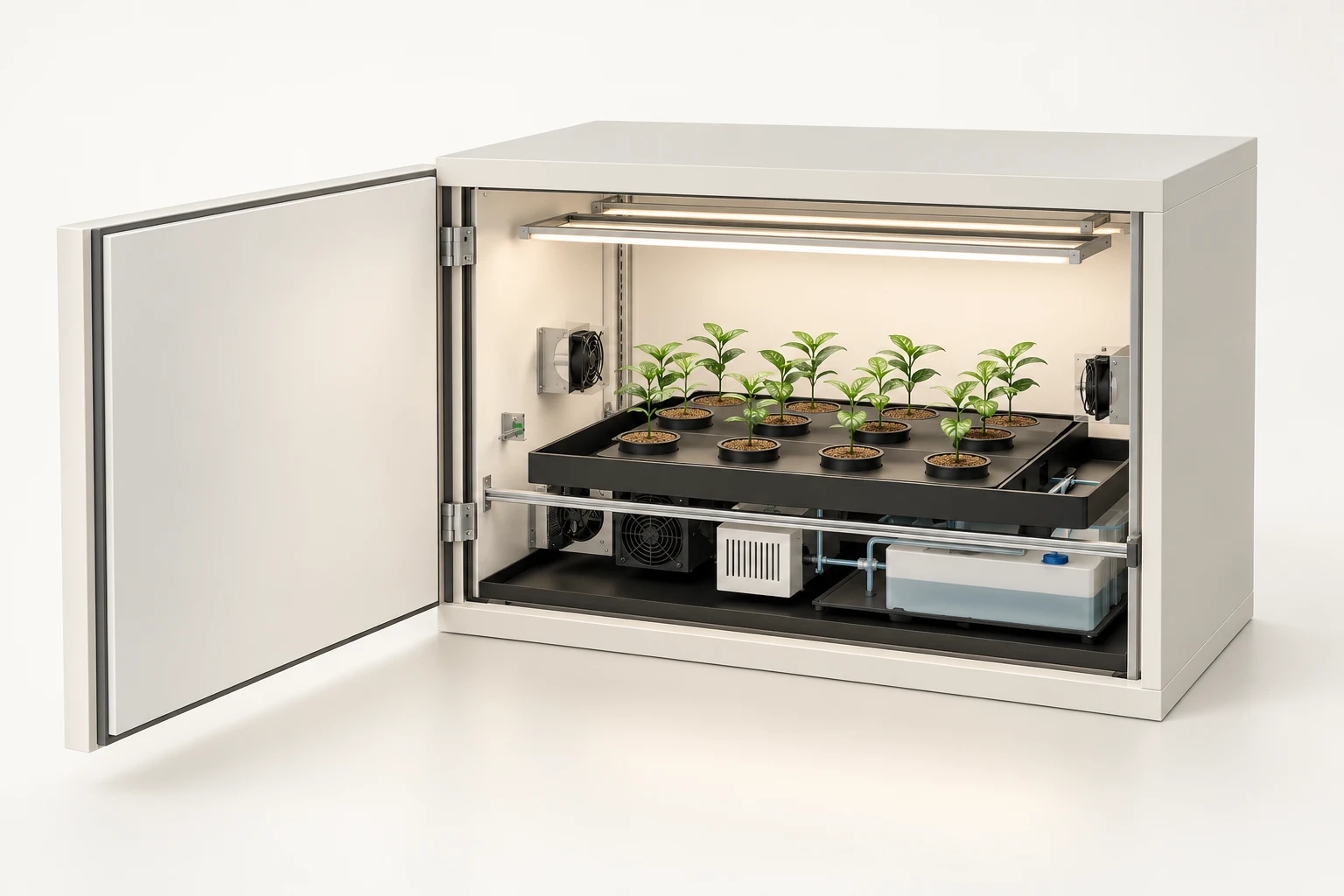
Before: the earlier website concept illustration. It showed the idea, not fabrication geometry.After: 20 October render from the updated blueprint model. The cabinet and plants are digital, not a built prototype.Camera planning: overhead render from the blueprint-derived scene. Modelled wheatgrass; optics are not calibrated.Camera planning: proposed elevated side view. This is a trial viewpoint, not the currently selected physical camera mount.Link to this update ↗
Retrospective12–18 October 2026 — partial Sunday snapshot
Better box details and software to practise with
We improved the drawings, organized the AI team and developed tools for practice.
Written 18 October 2026 · Published 18 October 2026
This update covers work through 18 October 2026. Later work will be added in the next update.
What changed?
The box design now has two front doors, adjustable light mounts and a barrier to help keep damp plant air away from equipment below. We also made the power entry and cable routes clearer.
Who helped?
Our six named AI assistants now have clear jobs. This week their recorded work covered plant-growing advice, electrical and mechanical reviews, designing parts, software and planning. A person remains responsible for decisions.
What did we learn?
The dashboard can show practice readings from a software simulator. We improved it and started building a new simulation system. A useful simulator must show the limits of the real sensors, rather than pretend they can see everything.
What comes next?
The new simulation work still needs combined checks. The drawings also need real parts, fit checks and physical tests. The growing box is still a design; we have no harvest or proven AI plant-care result to report. Plans for a larger nursery, training pictures and a server are further preparation.
Drawings, checks and reviews made the first growing-box design more detailed.
Written 18 October 2026 · Published 18 October 2026
What changed?
We made the first detailed design package for the coffee-seedling box. It includes part drawings, wiring plans and steps for assembly and testing. We also improved the 3D view so it better matches the design.
Why does it help?
These records help us find missing details before buying parts. Reviews looked at power, water, heat and how someone would reach the equipment for repairs.
What did we learn?
The AI practice plan needs careful checks too. Many pictures of one plant are not the same as many separate growing trials. AI advice will need a person's approval.
What comes next?
We still need to check the chosen parts, build the box and test it in real life. The computer checks cover the design records. They do not prove electrical safety or successful plant growth. Supplier and funding research are preparation work; no purchase or funding award is reported here.
A small growing box is the first step toward a much bigger question.
Written 18 October 2026 · Published 18 October 2026
The idea
Could we grow tropical plants in Iceland using carefully controlled indoor conditions? GeoCuna began by exploring that question. Coffee became the first crop to design around.
The first step
The plan starts with a small box for seedlings. The design brings together warmth, light, water, moving air and cameras. A larger growing container is a possible later step.
How we will work
We will use ChatGPT and Codex, plus Claude and Claude Code, to help with the project. We aim to use subscriptions around $20 a month. We also plan to use inexpensive computer parts to build and run our own local AI models. These choices were confirmed on 18 October 2026.
What we learned
A useful drawing must explain how the parts fit and work together. A nice picture alone cannot tell us whether a box is safe, easy to build or good for plants.
What comes next
The first goal is to build and test the small box. Bigger systems and geothermal heating remain future ideas. This entry looks back at the project’s foundations in 2026. It describes planning and research; it does not report a built box or a harvest.