AI
How much can AI help us research, design, build and run the system, and how much plant care can run on small models and inexpensive computers?
 Get in touch
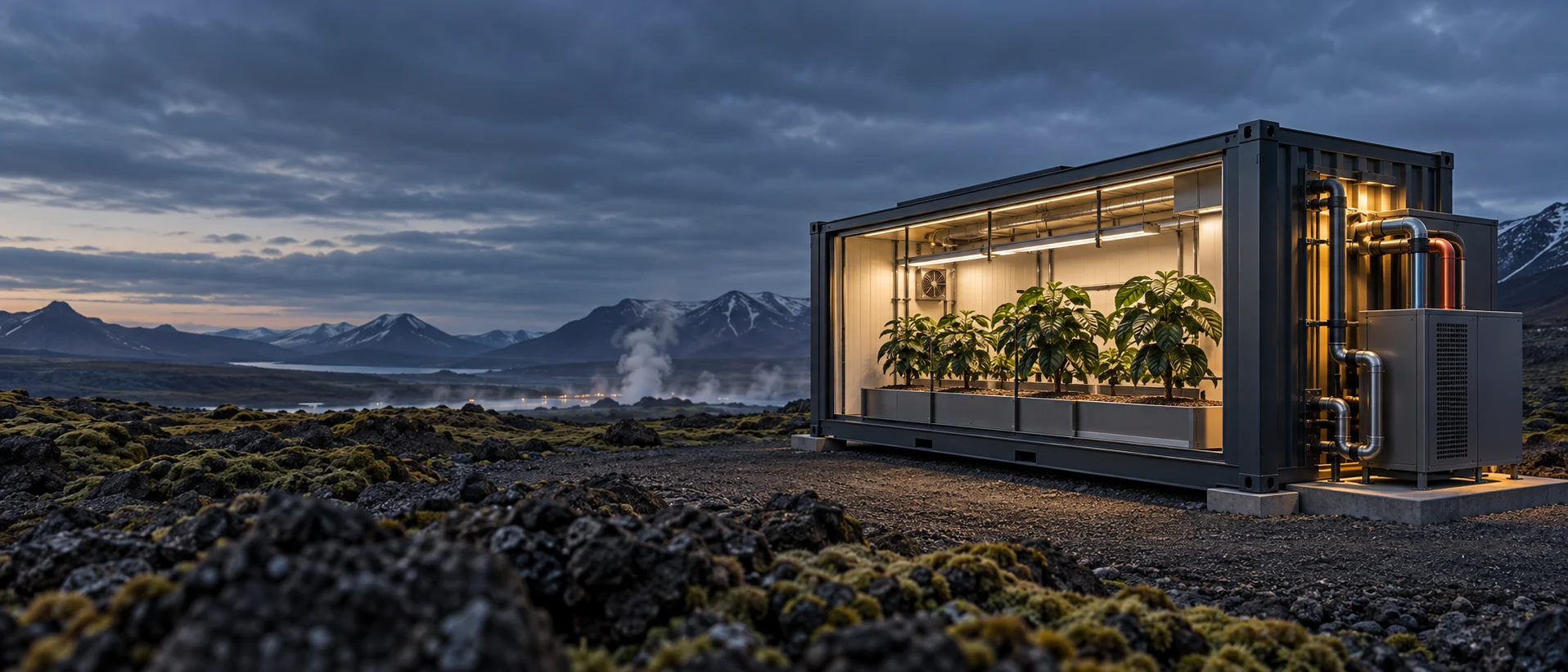
GeoCuna explores how AI, affordable engineering and local renewable energy can make tropical crops practical to grow in cold climates. It starts with one small, measured prototype.
Design illustration — unbuilt conceptA possible future growing chamber. Concept artwork, not a built facility.
A documented prototype design. Nothing is built or measured yet; building and testing it is the next step.
See the pathWe start in Iceland, with coffee seedlings, learning through small prototypes, measured trials and continuous improvement. Cacao is a possible later crop.
We want to understand what these systems can achieve, what they cost to run, and whether high-value crops such as specialty coffee and cacao can be grown locally instead of relying only on vulnerable global supply chains.

Geo + cunaEarth + cradle. A protected place for growth to begin.
How much can AI help us research, design, build and run the system, and how much plant care can run on small models and inexpensive computers?
Where are inexpensive, readily available parts good enough, and where does better equipment earn its cost?
Geothermal heat in Iceland, later. Solar and other local sources in other places.
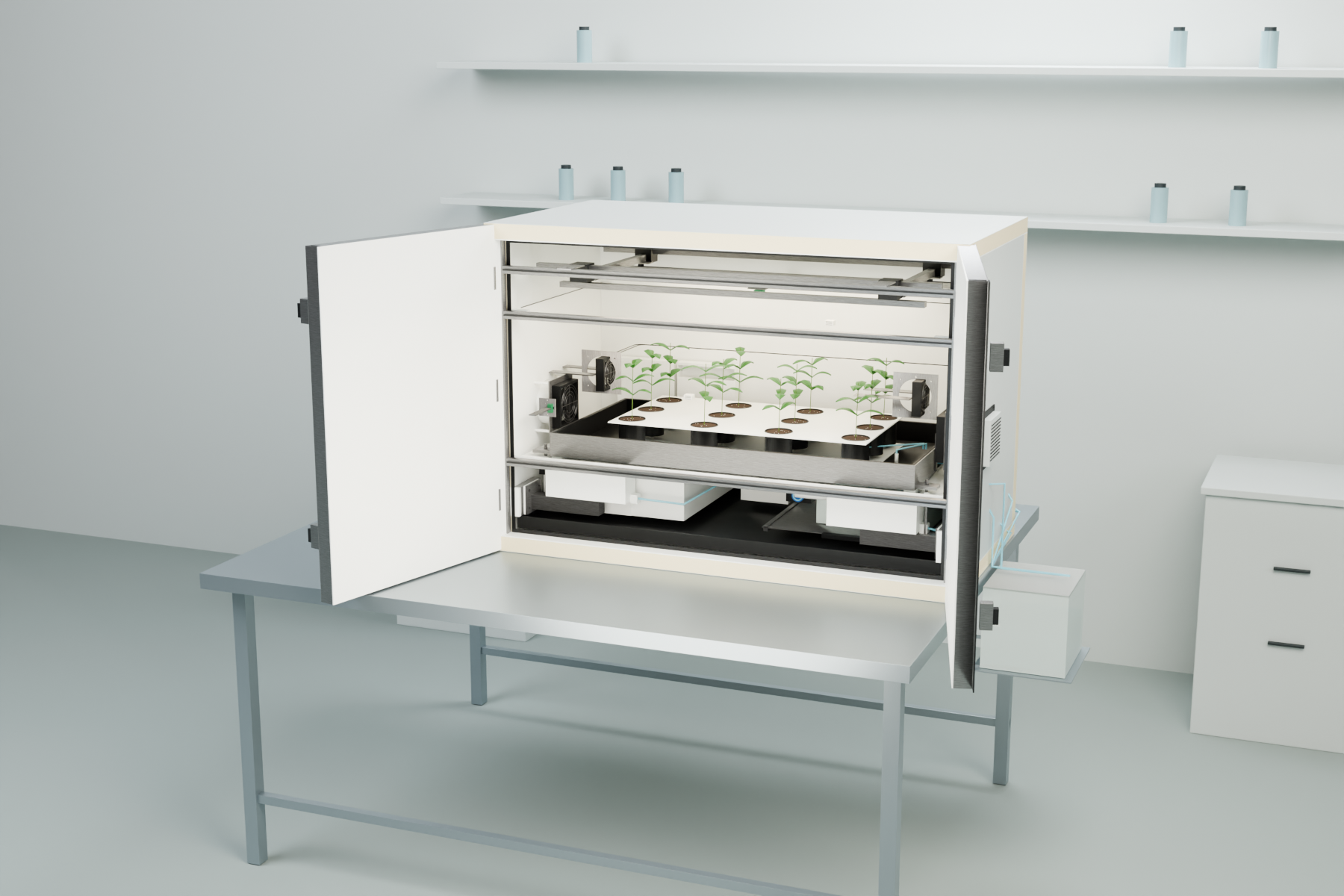
Box V1 is a small cabinet designed for twelve coffee seedlings. It is electric-first and designed around inexpensive, readily available components.
The aim is to learn whether it can hold suitable conditions for tropical plants in Iceland, and to record honestly what that takes.
AI helps us research, design, build and operate the system, and we measure how much it actually helps.
A person approves every change to the growing environment. Independent hardware safety controls stay in charge.
GeoCuna combines human judgment, physical testing and specialised AI agents. Together they build a shared, documented body of knowledge from research, design reviews and trial results.
Sets the direction and makes every decision. The AI agents advise; a person decides.
Systems engineering and coordination.
Botany and plant-growing conditions.
Mechanical and thermal engineering.
Electrical systems and controls.
Fabrication and machinist review.
Software and data engineering.
The agents are AI models given defined roles, not employees. Their value is judged by the quality of their decisions and the performance of the real system.
Each step ends at a decision gate. The next one starts only when the evidence supports it.
Build the twelve-pod design from inexpensive, readily available parts. Check fit, assembly, electrical safety, thermal behaviour and the water system before any plants go in.
Documented commissioning and safe behaviour when something fails.
Develop AI monitoring on a separate wheatgrass bench, then run coffee germination and seedling trials in the tested cabinet. Record plant health, energy, water, failures and cost.
Repeated batches and useful, traceable records.
Learn from a small grow-on trial before investing in a larger chamber. Test isolated geothermal heating alongside lighting, cooling, humidity, access and long-term plant care.
Plants that do well, reliable climate control and a costed operating plan.
Share utilities and data across growing modules, develop crop-specific settings and explore robotic help with routine work.
Evidence of real need, and validated economics, safety and reliability.
Box V1 is electric-first. A geothermal retrofit is reserved in the design, not installed.
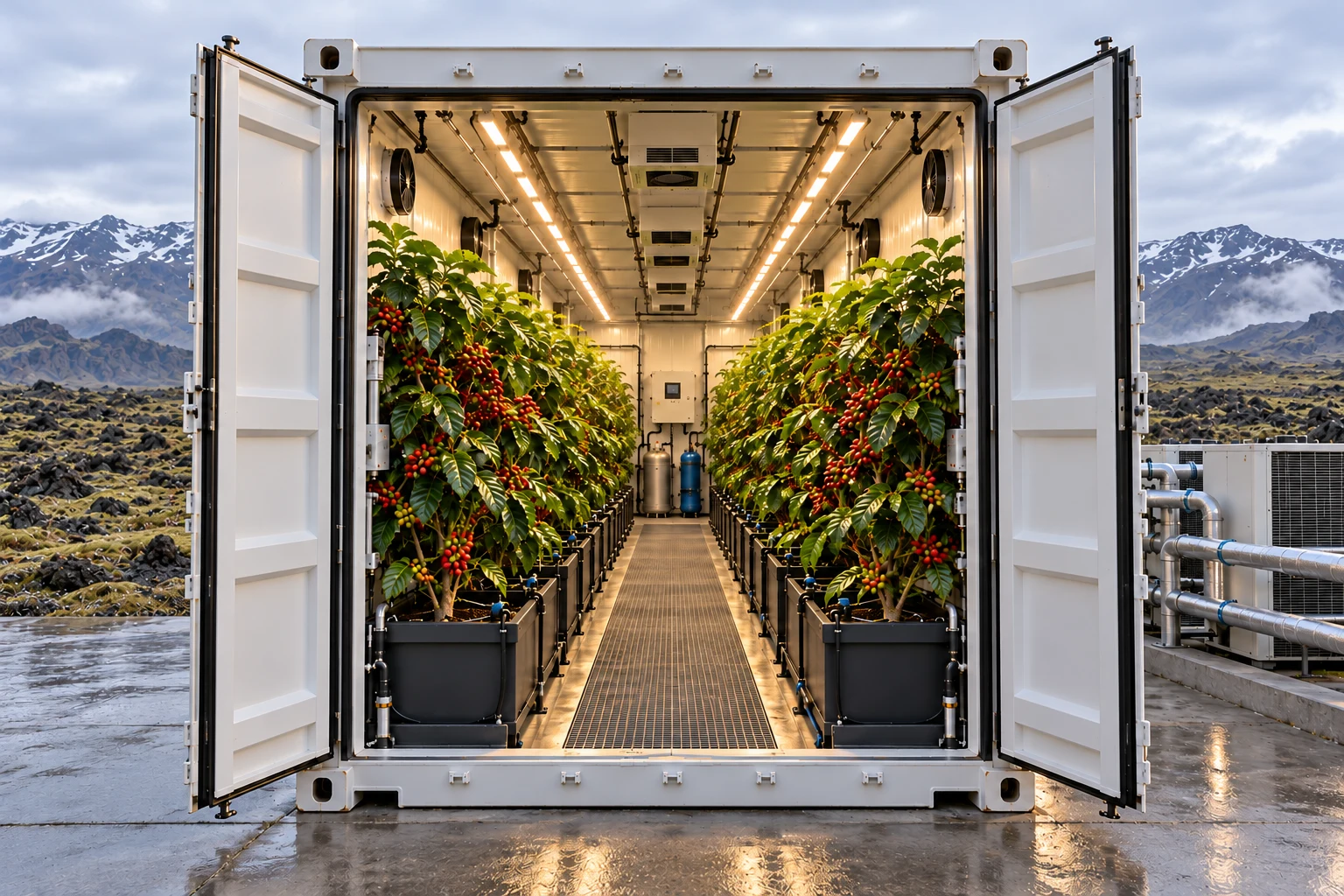
Systems that could be manufactured, transported and adapted to different places, once the first one has proven itself.
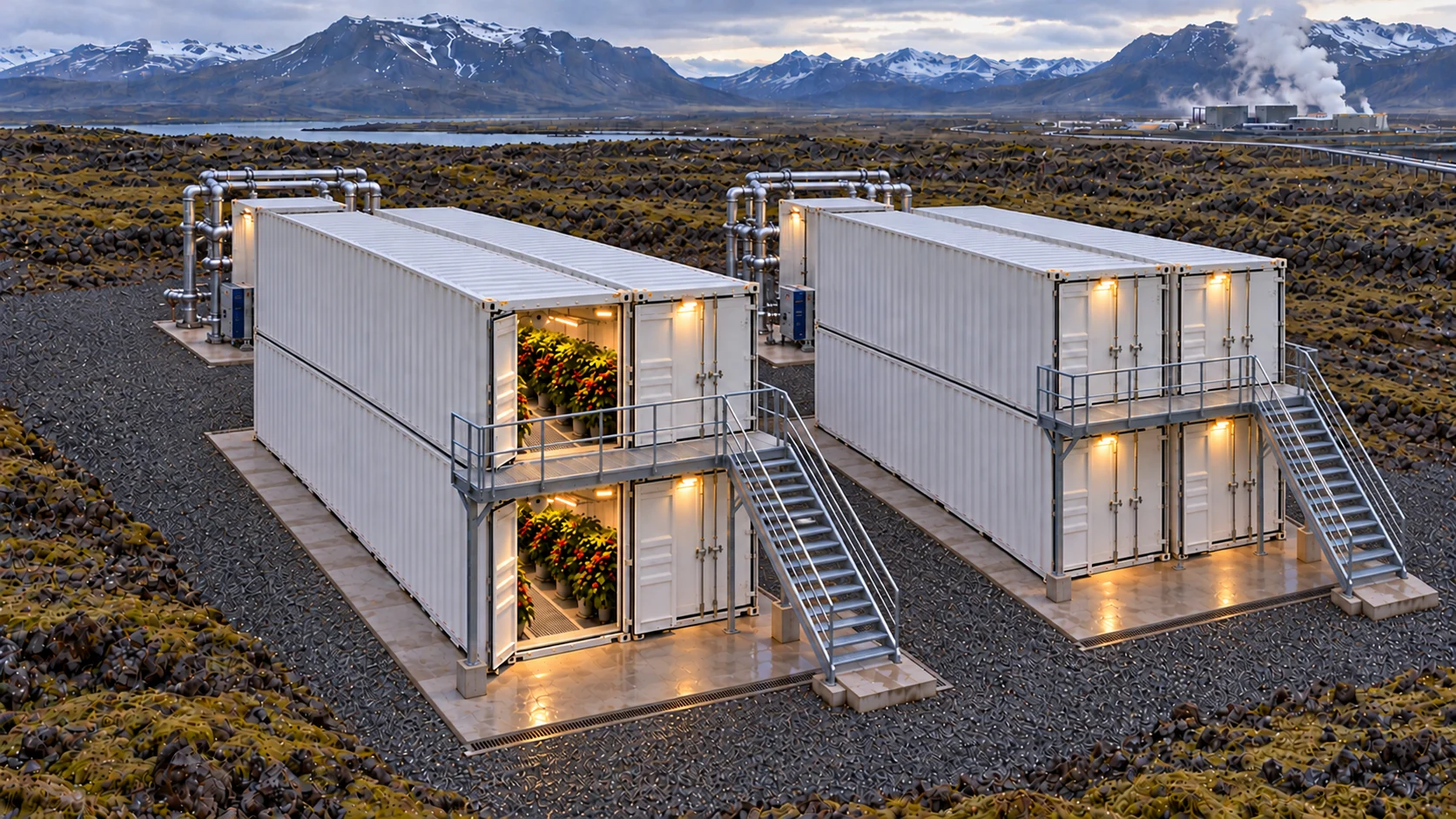
Container systems heated with local geothermal energy.
Solar power, direct sunlight, water reuse and climate control.
Saving water and managing extreme heat and the swing between day and night.
As the technology becomes practical and affordable, automation and robotics could take on routine work, making these systems easier to run and scale. Each direction needs its own evidence; none is designed or built.
Short, simple updates on what changed, what we learned and what comes next.
We checked how the box can be built and how its parts fit together. The design now includes four weighing sensors under the plant tray, with updated electronics, wiring and digital models.
We would like to talk with grant funds, early supporters, plant researchers, growers and engineers.